Product Description
The Solar Kiwi Dryer by Rudra Solar Energy Pvt. Ltd. is a hygienic, energy-efficient and environmentally friendly solar drying solution designed for drying fresh kiwi slices, kiwi pieces and other suitable kiwi-based products.
Kiwi contains high moisture and is highly perishable after harvesting. Controlled dehydration can help convert fresh kiwi into dried and value-added products suitable for further processing, packaging and storage.
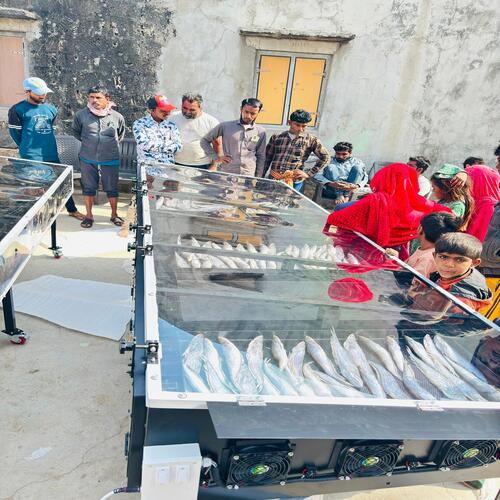
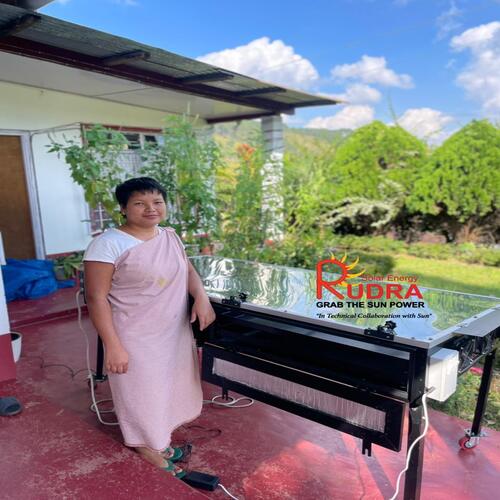
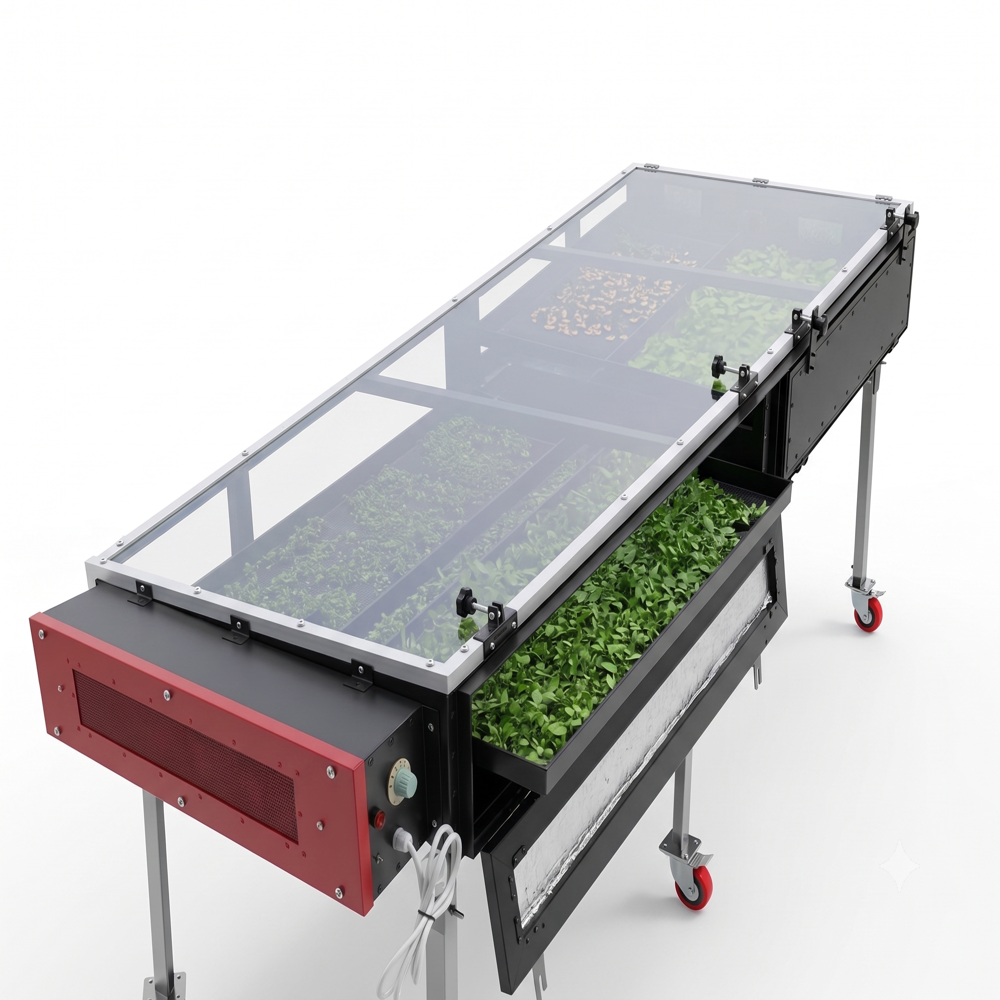
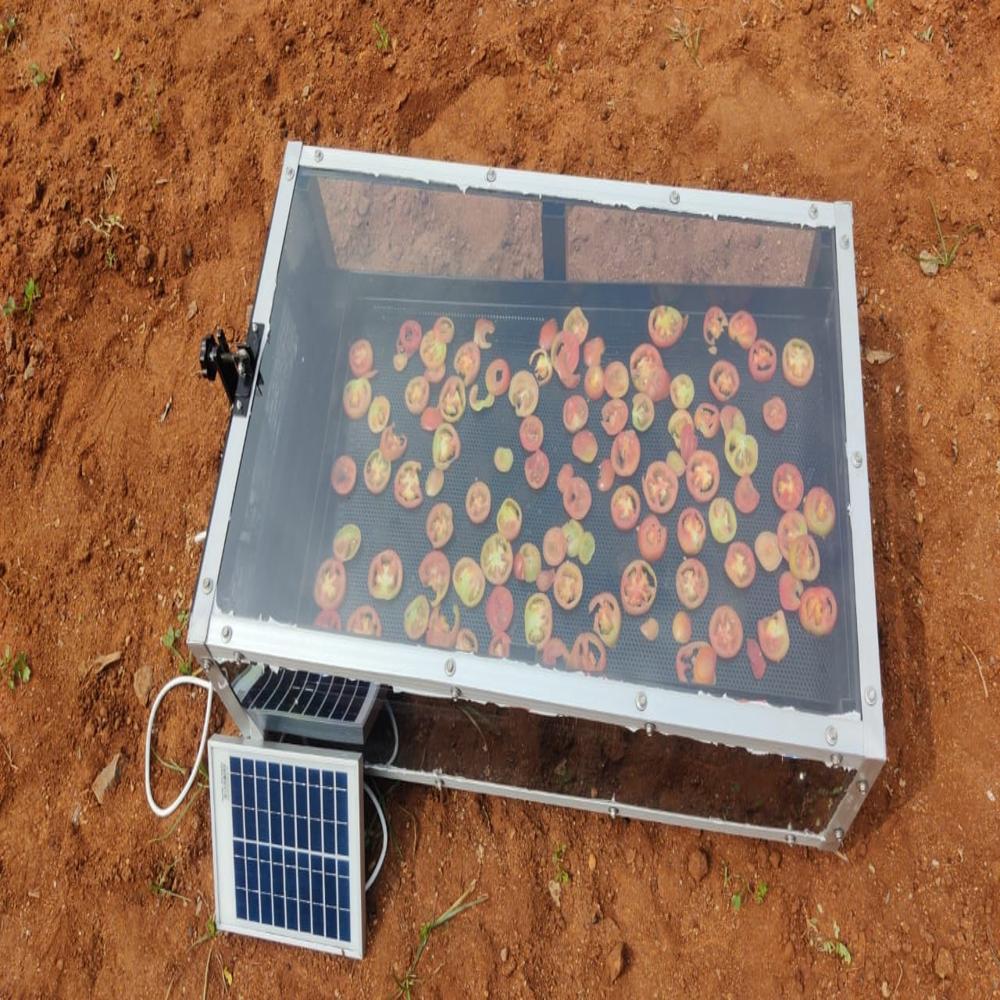
Rudra Solar Energy's solar horticultural drying technology uses an enclosed multi-tray drying chamber with solar-assisted heating and controlled airflow. The system is designed to reduce direct exposure to outdoor conditions such as dust, insects, birds and sudden rain compared with traditional open-sun drying.
The Solar Kiwi Dryer is suitable for kiwi growers, farmers, FPOs, SHGs, fruit processors, food-processing businesses, MSMEs, agro-processors and rural entrepreneurs.
Rudra Solar Energy Solar Kiwi Dryer Specifications
| Parameter |
Specification |
| Product Name |
Solar Kiwi Dryer |
| Manufacturer / Brand |
Rudra Solar Energy Pvt. Ltd. |
| Drying Technology |
Solar-assisted direct + indirect heating |
| Drying Chamber |
Enclosed multi-tray chamber |
| Capacity Range |
5 kg/batch to 500 kg/batch |
| Construction |
Food-grade Aluminium powder-coated body |
| Glazing |
UV-stabilised polycarbonate / toughened glass |
| Tray System |
Food-contact multi-tray arrangement |
| Air Movement |
Controlled / forced airflow depending on configuration |
| Typical System Temperature Range |
50C80C |
| Drying Rate |
Up to 4 kg/day/sq. meter |
| Drying Efficiency |
Up to 67% |
| Backup Option |
Optional electric / biomass backup |
| Configuration |
Standard and customised options |
| Primary Energy Source |
Solar energy |
Rudra's current Solar Horticultural Crops Dryer is available in configurations from 5 kg/batch to 500 kg/batch, while the exact dryer configuration can be selected according to crop, moisture load, tray area, airflow and processing requirement.
Important Note on Kiwi Drying Temperature
The 50C80C figure represents the typical system capability/range and should not be interpreted as a single recommended temperature for kiwi.
The appropriate kiwi drying condition depends on:
-
Kiwi variety
-
Fruit maturity
-
Initial moisture
-
Slice thickness
-
Product preparation
-
Tray loading
-
Airflow
-
Relative humidity
-
Solar radiation
-
Desired final moisture
-
Intended end product
Therefore, drying temperature and duration should be established according to the specific kiwi product and required final quality.
What Can Be Dried Using a Solar Kiwi Dryer?
The system can be evaluated for different kiwi product forms, including:
The final product format should be decided before selecting the drying parameters because different product sizes and thicknesses have different moisture-removal requirements.
How Does a Solar Kiwi Dryer Work?
The basic process is:
Fresh Kiwi Sorting Cleaning Peeling / Preparation Slicing Tray Loading Solar Heating + Controlled Airflow Moisture Reduction Cooling Packaging / Further Processing
1. Sorting
Fresh kiwi is inspected and unsuitable or damaged fruit is removed.
2. Preparation
The fruit is prepared according to the intended product. Depending on the product, this may include peeling and slicing.
3. Tray Loading
Prepared kiwi slices or pieces are distributed across the food-contact trays.
Uniform loading helps maintain better airflow through the product.
4. Solar Heating
Solar energy is used to generate the heat required for the drying process. Rudra's horticultural dryer uses direct and indirect solar heating depending on configuration.
5. Controlled Airflow
Air movement supports moisture removal from the kiwi.
The required airflow depends on product thickness, loading density and dryer configuration.
6. Moisture Reduction
Heat and airflow progressively reduce moisture from the prepared kiwi material.
7. Cooling and Packaging
After achieving the required product condition, the dried kiwi is cooled and prepared for packaging or further processing.
Why Use a Solar Dryer for Kiwi?
Kiwi is a high-moisture fruit and requires appropriate post-harvest handling.
Traditional open-sun drying can expose fruit to dust, insects, birds, rain and changing environmental conditions.
An enclosed solar dryer provides a more organised drying environment with:
-
Controlled airflow
-
Enclosed drying chamber
-
Tray-based loading
-
Solar-assisted heating
-
Reduced outdoor exposure
Rudra's Solar Horticultural Crops Dryer is specifically positioned for suitable fruits, vegetables, flowers, mushrooms, tuber crops and other compatible horticultural produce.
Key Features of Rudra Solar Kiwi Dryer
Solar-Assisted Drying
Uses solar energy as the primary source of drying heat in the solar-primary configuration.
Controlled Airflow
Organised airflow helps support moisture removal from prepared kiwi.
Enclosed Drying Chamber
The enclosed design helps reduce direct exposure to dust, insects, birds and sudden rain compared with open-sun drying.
Food-Grade Construction
Rudra's horticultural dryer uses a food-grade Aluminium powder-coated body with suitable food-contact tray arrangements.
UV-Stabilised Glazing
The system can use UV-stabilised polycarbonate or toughened glass, depending on configuration.
Multi-Tray Loading
The multi-tray arrangement provides organised product loading and allows different suitable products to be processed in separate batches.
Optional Backup
Suitable configurations can include electric or biomass backup when additional operating flexibility is required.
Scalable Capacity
Rudra offers horticultural dryer configurations from 5 kg/batch to 500 kg/batch, allowing selection according to processing scale.
Benefits of Solar Kiwi Drying
A Solar Kiwi Dryer can provide several advantages for growers and processors:
Supports controlled post-harvest drying
Helps reduce direct exposure to outdoor contamination
Supports conversion of fresh kiwi into dried and value-added products
Uses renewable solar energy
Helps reduce dependence on conventional drying energy
Provides organised tray-based drying
Supports small-scale and commercial processing
Can be configured according to processing requirements
Suitable for farmers, FPOs, SHGs and MSMEs
Supports seasonal fruit value addition
Solar Kiwi Dryer for Farmers
For individual kiwi growers, a solar dryer can provide an opportunity to explore value addition instead of depending entirely on fresh-fruit sales.
Fresh kiwi can be processed into suitable dried products and potentially marketed through different channels depending on food-processing regulations, product quality, packaging and market demand.
A smaller dryer configuration can be considered for:
Rudra's horticultural dryer range starts from 5 kg/batch, providing options for smaller processing requirements.
Solar Kiwi Dryer for FPOs
Farmer Producer Organizations can use suitable solar drying systems for organised post-harvest processing.
An FPO can potentially aggregate kiwi from multiple growers and establish a shared processing model.
Possible workflow:
Multiple Farmers FPO Collection Sorting Kiwi Preparation Solar Drying Packaging Market
This can support:
The correct dryer size should be selected according to the fresh kiwi quantity received per batch, seasonal production, usable tray area and required daily throughput.
Solar Kiwi Dryer for Commercial Food Processing
Commercial processors can consider larger configurations when the objective is regular dehydration of kiwi or multiple compatible horticultural products.
Rudra's current horticultural dryer range provides configurations from 5 kg/batch to 500 kg/batch.
A commercial buyer should evaluate:
-
Fresh kiwi quantity per batch
-
Number of batches per day
-
Initial moisture
-
Slice thickness
-
Final moisture requirement
-
Available solar radiation
-
Tray area
-
Airflow requirement
-
Backup requirement
-
Packaging system
-
Storage conditions
-
Downstream processing
This approach provides a more accurate basis for selecting equipment than choosing a machine only by nominal kilogram capacity.
Does Solar Kiwi Drying Have a Fixed Drying Time?
No.
There is no single drying time that applies to every kiwi batch.
Drying duration can vary depending on:
-
Kiwi variety
-
Fruit maturity
-
Initial moisture
-
Slice thickness
-
Product loading
-
Tray arrangement
-
Airflow
-
Temperature
-
Relative humidity
-
Solar radiation
-
Desired final moisture
For example, thin kiwi slices and thick kiwi pieces will not necessarily require the same drying duration.
Therefore, commercial processing should establish the appropriate drying cycle through product-specific trials and moisture measurement.
What Temperature Is Used for Kiwi Drying?
Rudra's current Solar Horticultural Crops Dryer has a typical system range of 50C80C. However, the appropriate operating temperature for kiwi should be selected according to the product and quality requirements rather than automatically using the maximum system temperature.
Factors to consider include:
Product form + slice thickness + moisture + airflow + desired final moisture + quality requirements
This is especially important for fruits where excessive heat can affect the desired appearance, texture, flavour or other quality characteristics.
Solar Kiwi Dryer vs Open Sun Drying
| Feature |
Open Sun Drying |
Solar Kiwi Dryer |
| Drying environment |
Outdoor |
Enclosed |
| Airflow |
Weather-dependent |
Controlled / forced depending on configuration |
| Dust exposure |
High |
Reduced |
| Insect exposure |
Possible |
Reduced |
| Bird exposure |
Possible |
Reduced |
| Rain protection |
Limited |
Enclosed chamber |
| Product loading |
Open arrangement |
Multi-tray arrangement |
| Solar energy |
Yes |
Yes |
| Processing control |
Limited |
More organised |
| Commercial scalability |
Limited |
Configurable |
The solar dryer does not eliminate all food-processing risks; proper cleaning, preparation, hygiene, cooling, packaging and storage remain essential.
Suitable Users
The Solar Kiwi Dryer can be considered by:
Farmers
For farm-level fruit drying and value addition.
FPOs & FPCs
For collective post-harvest processing.
SHGs
For small-scale food-processing businesses.
Fruit Processors
For commercial dehydration and processing.
MSMEs
For developing dried fruit products.
Food Entrepreneurs
For value-added fruit products.
Agro-Processing Businesses
For seasonal horticultural processing.
Institutional Projects
For demonstrations, livelihood projects and post-harvest initiatives.
Rudra Solar Energy Solar Kiwi Dryer Capacity Options
Rudra Solar Energy's current horticultural dryer range is available in configurations from:
5 kg/batch 10 kg/batch larger customised configurations 500 kg/batch
The exact configuration should be selected based on:
Fresh Kiwi Input + Product Form + Moisture Load + Tray Area + Airflow + Daily Throughput
Rudra also offers customised configurations for suitable horticultural processing requirements.
Technical Advantages
The Solar Kiwi Dryer combines several features designed for organised horticultural drying:
Direct + Indirect Solar Heating
Supports solar heat transfer through the dryer configuration.
Controlled Airflow
Helps move heated air through the drying chamber and product.
Enclosed Chamber
Provides a more protected environment than traditional open-sun drying.
Food-Contact Trays
Supports organised loading of prepared fruit.
Solar-Primary Operation
Allows solar energy to serve as the primary drying energy source.
Optional Hybrid Backup
Electric or biomass backup can be considered where appropriate.
Modular Capacity
Capacity configurations can be selected according to processing scale.
Applications
The Solar Kiwi Dryer can be used for:
-
Kiwi Slice Drying
-
Kiwi Piece Drying
-
Dried Kiwi Production
-
Dehydrated Kiwi
-
Kiwi Flake Production
-
Kiwi Processing
-
Fruit Dehydration
-
Horticultural Crop Drying
-
Farm-Level Value Addition
-
FPO Processing
-
SHG Food Processing
-
Commercial Fruit Processing
-
Seasonal Fruit Preservation
Rudra's broader horticultural dryer can also be used for other suitable fruits, vegetables, flowers, mushrooms and tuber crops, allowing the equipment to be considered for multi-crop processing where compatible.
Solar Kiwi Processing Business Opportunity
A Solar Kiwi Dryer can form one component of a small or commercial value-addition business.
A possible business model is:
Kiwi Farmer Fresh Kiwi Sorting Drying Dried Kiwi Packaging Retail / Wholesale / Food Processing
Additional products can be considered where technically suitable, allowing the same horticultural drying infrastructure to support multiple crops in separate batches.
This can be particularly useful for FPOs, cooperatives, SHGs and agro-processing entrepreneurs that handle multiple horticultural crops throughout the year.
Why Choose Rudra Solar Energy?
Rudra Solar Energy Pvt. Ltd. provides solar drying solutions for agricultural, horticultural and food-processing applications.
Its current Solar Horticultural Crops Dryer provides:
-
5 kg/batch to 500 kg/batch configurations
-
Enclosed multi-tray drying
-
Food-grade construction
-
Direct and indirect solar heating
-
Controlled / forced airflow
-
UV-stabilised polycarbonate or toughened glass
-
Optional electric or biomass backup
-
Standard and customised configurations
The system is designed around the crop, moisture load, tray area and processing requirement, rather than treating every agricultural product as having identical drying conditions.
Popular Search Terms
Solar Kiwi Dryer, Solar Kiwi Drying Machine, Kiwi Drying Machine, Kiwi Dryer Machine, Kiwi Dehydrator, Kiwi Dehydration Machine, Solar Fruit Dryer, Kiwi Slice Dryer, Kiwi Fruit Dryer, Dried Kiwi Machine, Commercial Kiwi Dryer, Industrial Kiwi Dryer, Kiwi Processing Machine, Solar Fruit Dehydrator, Solar Horticultural Dryer, Horticultural Drying Machine, Solar Food Dryer, Fruit Dehydration Machine, Solar Agricultural Dryer, Kiwi Processing Equipment, Solar Kiwi Processing Machine, Rudra Solar Energy.
Frequently Asked Questions
What is a Solar Kiwi Dryer?
A Solar Kiwi Dryer is an enclosed drying system that uses solar-assisted heating and organised airflow to reduce moisture from prepared kiwi products.
What is the capacity of the Rudra Solar Kiwi Dryer?
Rudra's Solar Horticultural Crops Dryer is available in configurations from 5 kg/batch to 500 kg/batch.
Can kiwi be dried in a solar dryer?
Yes, suitable prepared kiwi products can be evaluated for solar drying. The appropriate drying cycle depends on the kiwi variety, preparation, thickness, moisture and required final product condition.
What temperature does the Rudra dryer provide?
The current horticultural dryer has a typical system range of 50C80C. The actual kiwi drying setpoint should be selected according to product-specific requirements.
Is the Solar Kiwi Dryer only for kiwi?
No. Rudra's horticultural dryer is designed as a multi-crop system for suitable fruits, vegetables, flowers, mushrooms, tuber crops and other compatible horticultural produce.
Does the dryer require electricity?
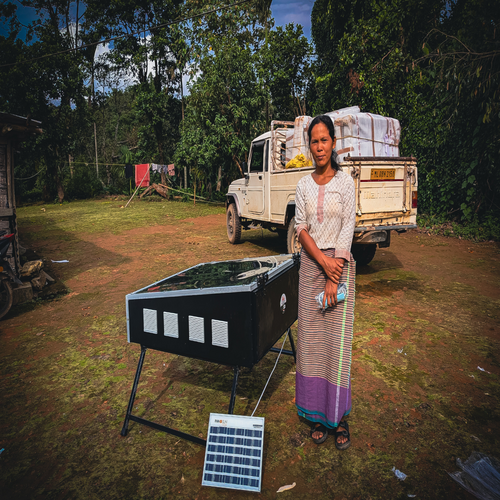
The solar-primary configuration uses solar energy for drying. Optional electric or biomass backup can be incorporated depending on the required configuration.
Who can use a Solar Kiwi Dryer?
Kiwi farmers, FPOs, SHGs, fruit processors, MSMEs, food entrepreneurs, cooperatives and commercial agro-processing businesses can consider the system according to their processing requirements.
Final Summary
The Solar Kiwi Dryer by Rudra Solar Energy Pvt. Ltd. is designed to provide an organised, enclosed and solar-assisted method for drying suitable kiwi products.
With 5 kg/batch to 500 kg/batch configurations, multi-tray loading, direct and indirect solar heating, controlled airflow, food-grade construction and optional backup configurations, the system can be considered for farm-level, FPO, MSME and commercial horticultural processing.
The right configuration should be selected according to fresh kiwi input, product form, slice thickness, moisture load, usable tray area, required final moisture and daily processing capacity.
Fresh Kiwi Preparation Solar Drying Moisture Reduction Dried Kiwi Packaging Value Addition
Rudra Solar Energy Pvt. Ltd. Solar Drying Solutions for Agricultural & Horticultural Value Addition.







 Send Inquiry
 Send Inquiry
 Send SMS
